Hybe:
Reinventing Gamified eCommerce
ROLE
Main UX/UI Designer (collaborating with CEO, marketing, and dev teams)
DURATION
2+ years, full-time
SKILLS
User Research, Prototyping, Responsive Design, Cross-functional Collaboration
Product overview
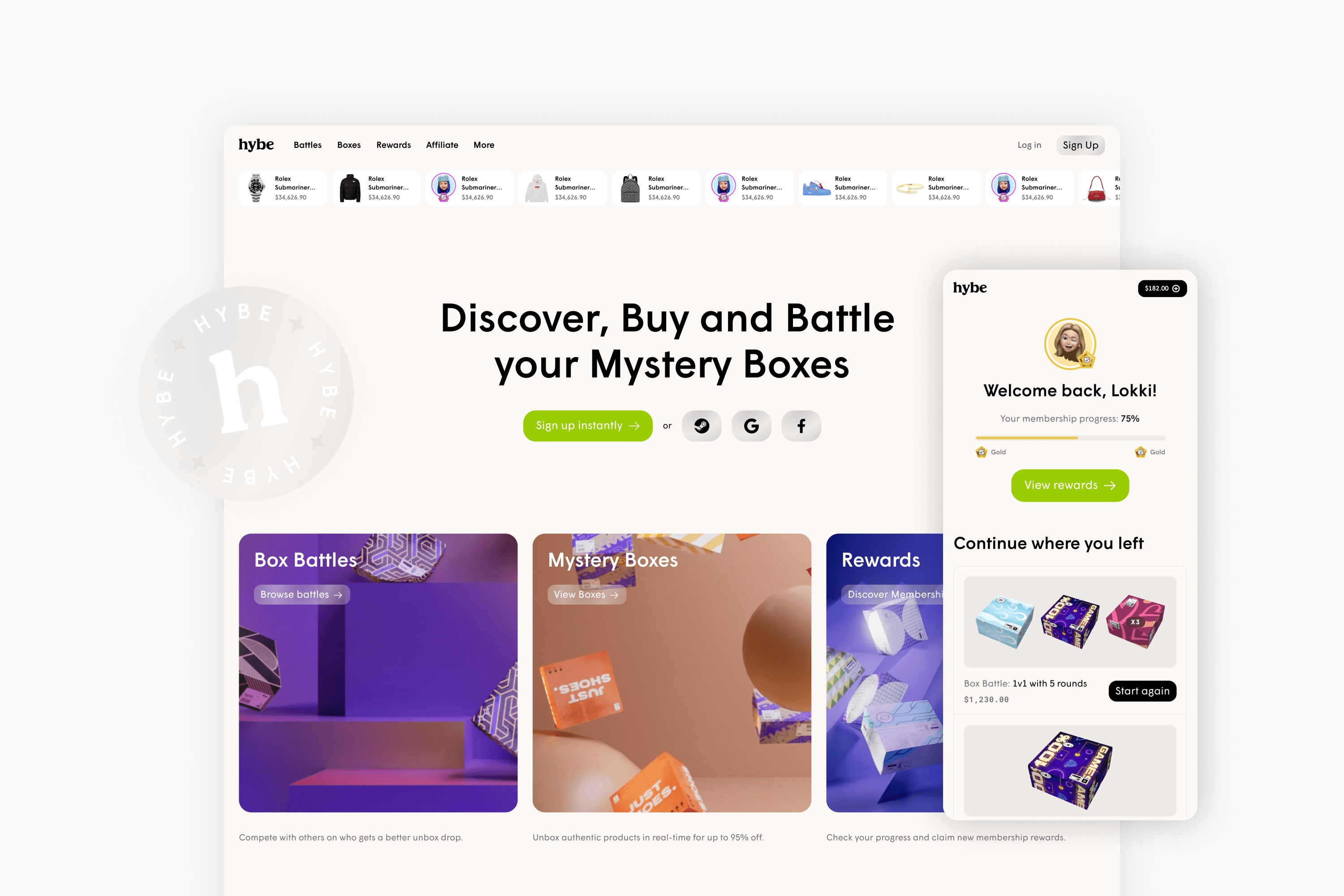
Hybe.com is a gamified e-commerce platform where users buy Mystery Boxes to win luxury products at reduced prices. The goal was to make shopping more exciting while ensuring transparency and trust.
Problem definition
Despite its unique concept, Hybe experienced a 20% decline in active users over six months, indicating a lack of sustained engagement. Users found the unboxing experience repetitive, rewards unmotivating, and the platform lacking interactivity.
Results
Research
At the start of this project, Hybe.com had already been operating for over two years, meaning we had an established user base and existing engagement data. However, retention rates were declining, and user feedback indicated a growing dissatisfaction with the platform’s core experience. To address this, we conducted user interviews, competitive analysis, and usability testing to identify key friction points and opportunities for improvement.
User Interviews
We conducted 20 in-depth interviews with existing users to understand why they disengaged from the platform and what would make them return. Our focus was on users who had previously engaged with Hype’s unboxing experience but had reduced or completely stopped their activity.
Why user interviews?
Since the platform had an active user base, we prioritized qualitative research to gather first-hand insights into behavioral patterns, frustrations, and unmet expectations. By speaking directly to users, we were able to uncover emotional drivers behind engagement and disengagement—something that raw analytics alone wouldn’t reveal.

MARK, 27
I’m really into gaming, so I was hoping for something more interactive with the prize games. Right now, it feels more technical or random, like it’s based on when you place a bid or how much you spend. I’d love to see some real competitive games.

EMILY, 24
I’m always on the lookout for luxury items and rare finds. But when I unbox a mystery box, it doesn’t feel as special as I’d hoped. I’d really like the experience to feel more exclusive and thrilling.

CARLOS, 41
I’m not too interested in the reward system because the levels only differ by voucher percentages. The differences aren’t significant enough to make me moving up. I’d prefer if there were more rewards to make the effort worthwhile.
Key findings:
Users crave more interactivity. The current experience felt passive and lacked skill-based engagement. Many users expected a gaming component rather than a purely transactional system.
Lack of reward differentiation. The reward system was not compelling enough to encourage long-term participation. Progression felt flat, and incentives were perceived as repetitive.
The unboxing experience lacked excitement. Users expected a more immersive and exclusive feel but found the process predictable over time.
During the user interviews, I also moderated usability testing sessions, asking participants to interact with the platform while verbalizing their thoughts. This revealed that long wait times for rewards often led users to disengage, as they would forget to return, emphasizing the need for instant or more interactive reward mechanics.
Additionally, a competitive analysis of eight industry competitors highlighted that platforms integrating social and competitive elements - such as real-time challenges and community-driven incentives - drove higher engagement and retention.
User Persona
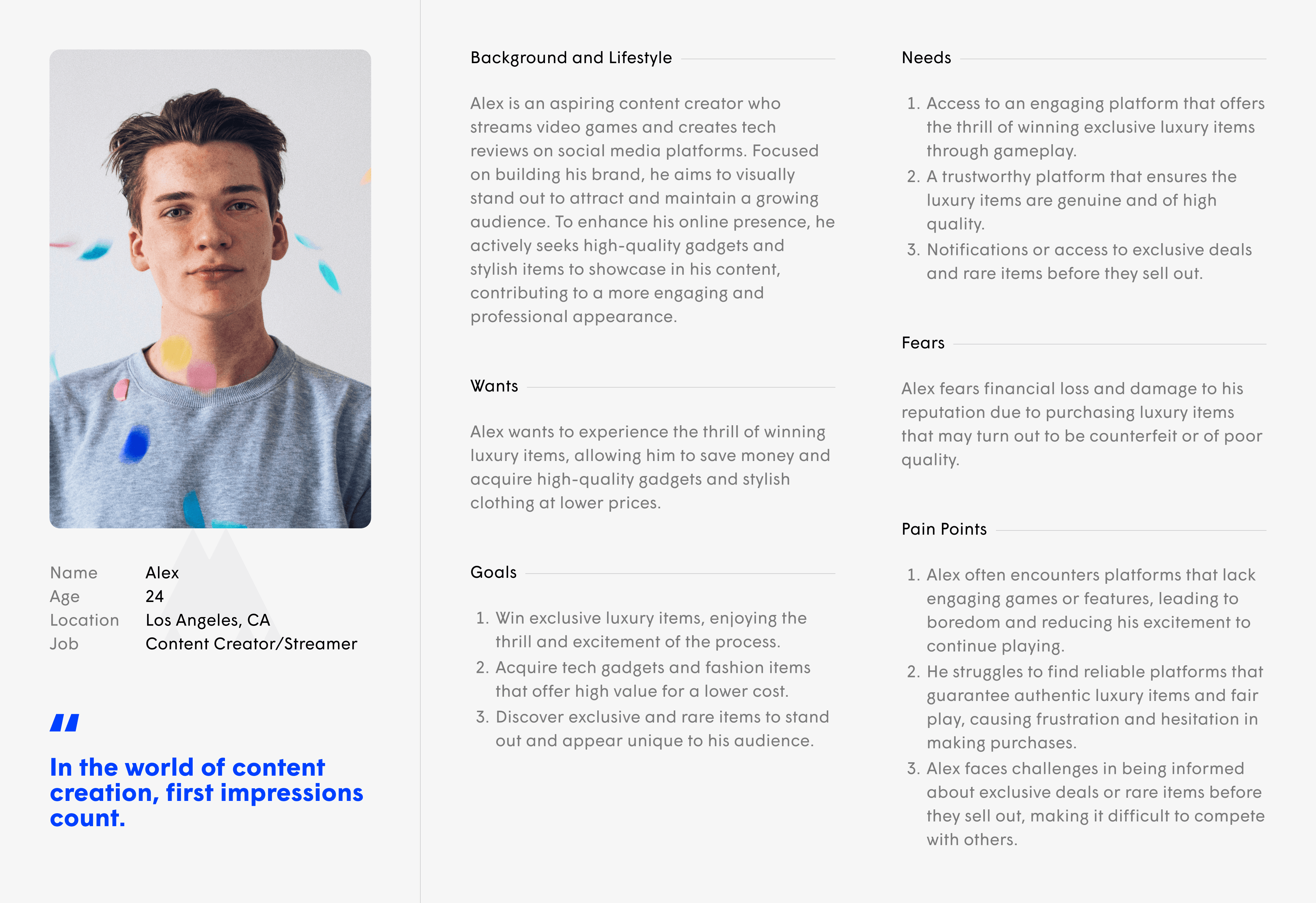
Based on interview insights, we developed a user persona, Alex, a content creator who seeks exclusive items and a thrilling experience. His motivations, pain points, and behaviors helped shape our approach to product enhancements.
Customer Journey Map
We mapped two distinct Customer Journey Maps (CJMs) to visualize pain points across different user stages:
New users discovering the platform – Identified acquisition friction points, such as a lack of clear incentives and confusion around rewards.
Returning users engaging with unboxing and prize games – Highlighted declining motivation due to repetitive gameplay and limited engagement mechanics.
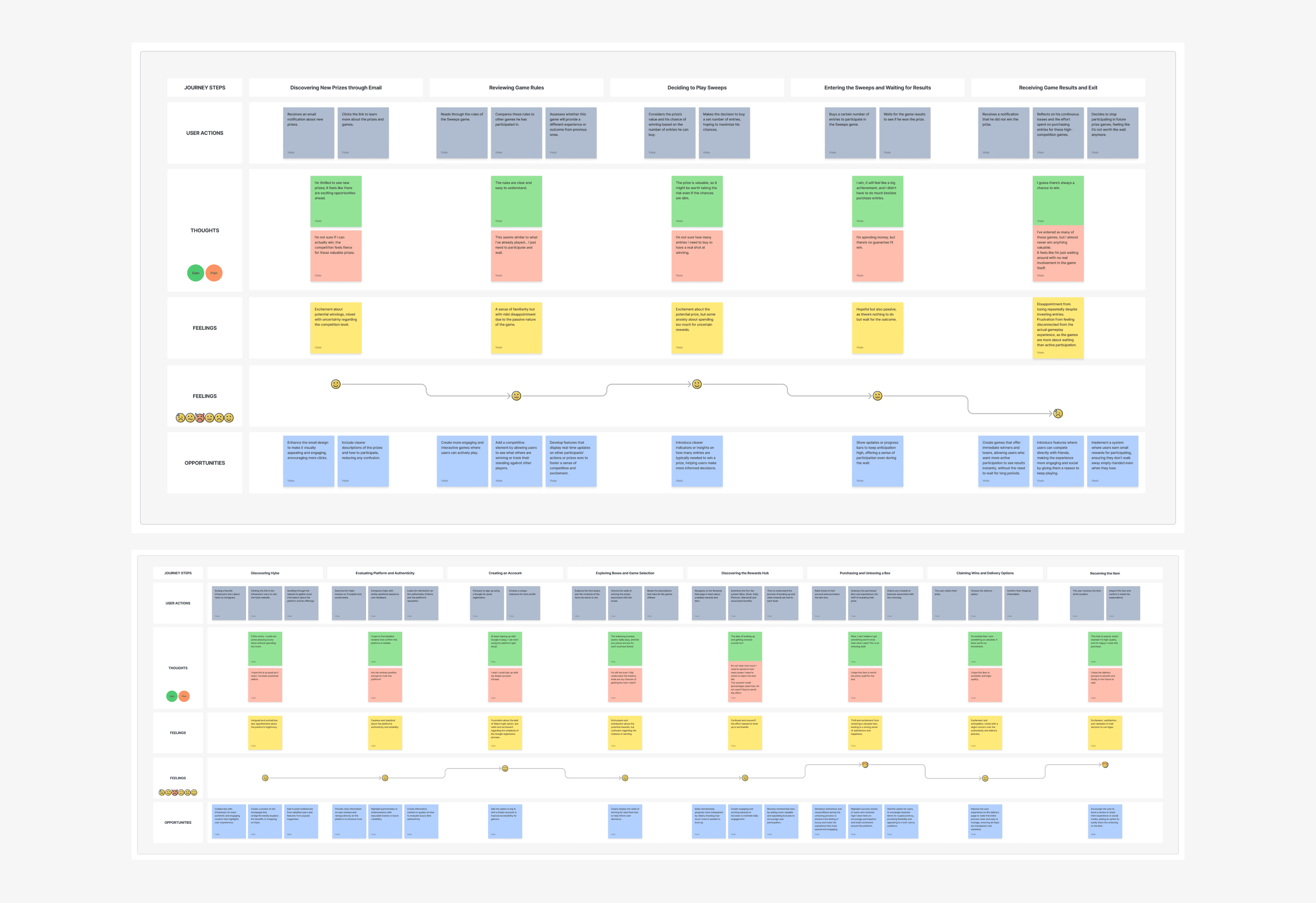
These artifacts provided a structured framework to guide design decisions, ensuring that every product improvement directly addressed user needs and frustrations
Solutions
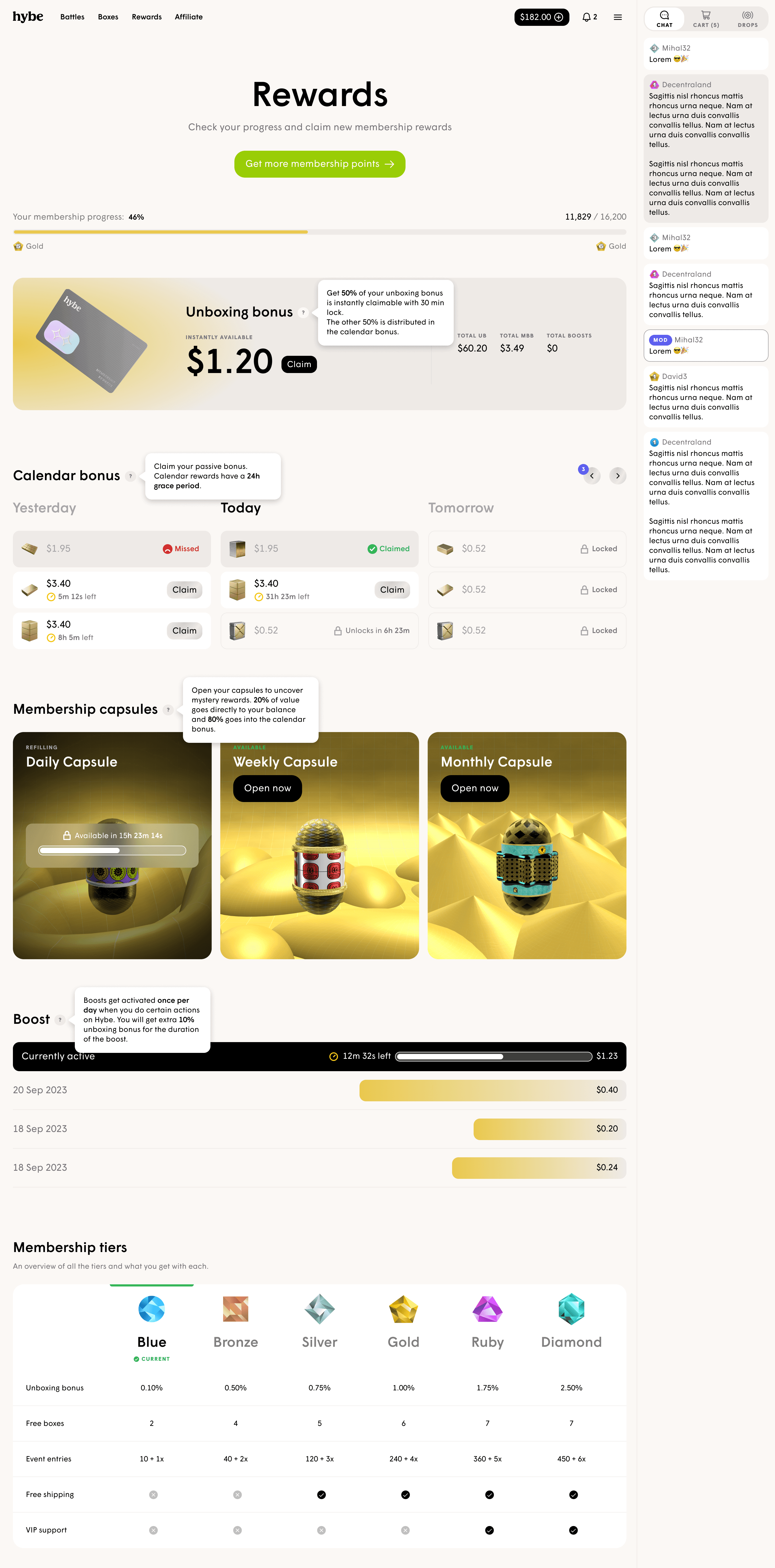
Membership Rewards: Driving Long-Term Engagement
To encourage sustained engagement, we redesigned the membership system to offer clear progression, exclusive benefits, and daily incentives.
Tier Progression & Benefits: Introduced six membership tiers (Blue, Bronze, Silver, Gold, Ruby, Diamond) with increasing perks, such as free shipping at Silver and VIP support at Ruby. This structured progression motivates users to remain active and level up.
Clear Progress Tracking: A real-time progress bar now visually communicates users’ advancement, reinforcing engagement by making milestones tangible.
Unboxing Bonuses & Calendar Rewards: Users receive increasing rewards for opening more boxes and logging in daily, promoting consistent interaction.
Membership Capsules: Daily, weekly, and monthly reward capsules sustain engagement by providing recurring incentives over time.
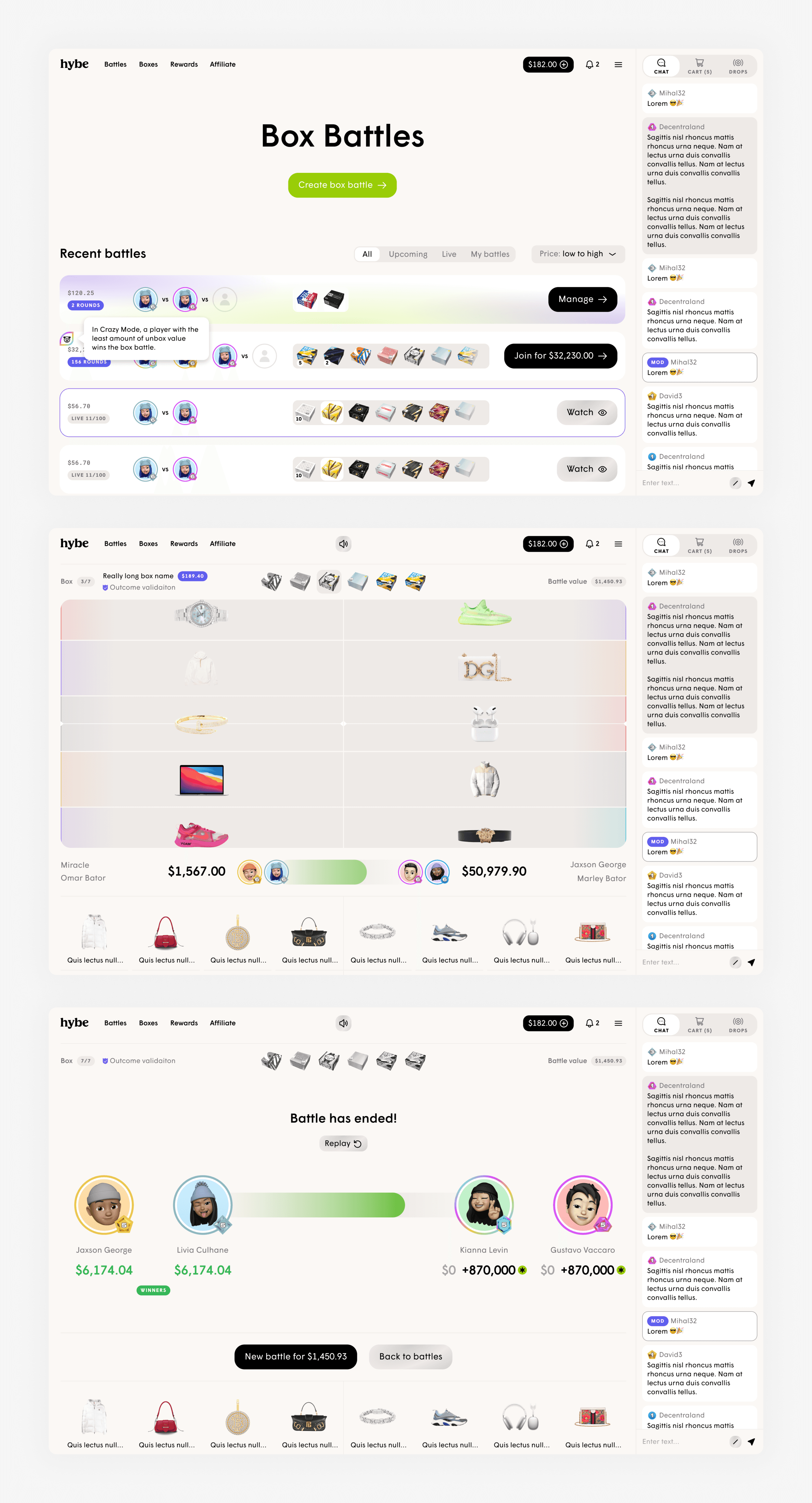
Box Battles: Gamifying the Experience
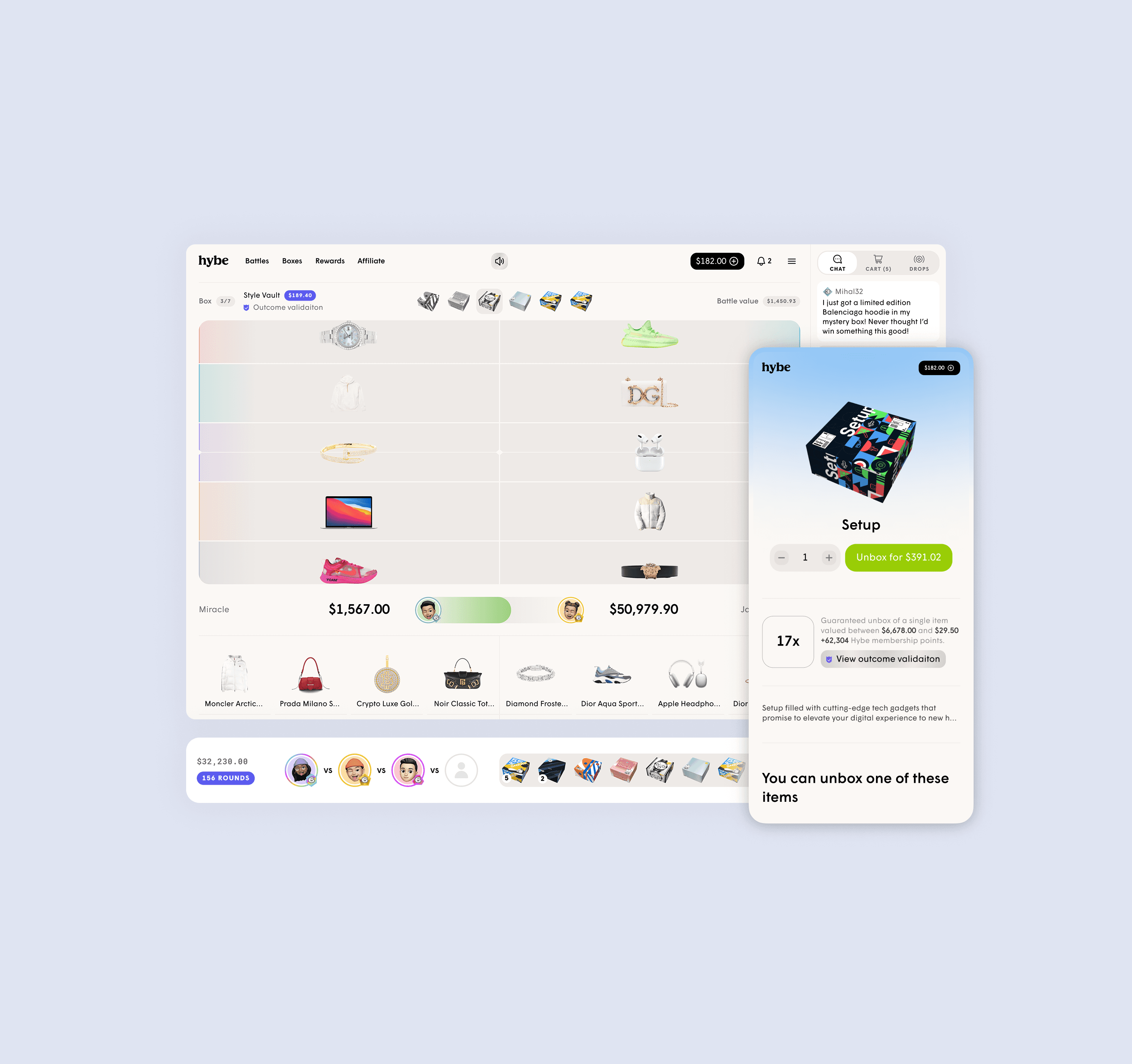
Recognizing the demand for interactive features, we introduced Box Battles, an innovative competitive mode designed to enhance social interaction and engagement.
User-Driven Battles & Social Play: Users can create or join battles with friends or AI opponents, fostering a competitive yet social experience.
Competitive Rewards Structure: A “winner-takes-all” model increases stakes and excitement, while all participants still earn membership points, ensuring continued engagement.
Diverse Game Modes: Four formats—Duel, Trio Battle, Quad Battle, and Team Battle—cater to different playstyles, keeping the experience fresh and dynamic.
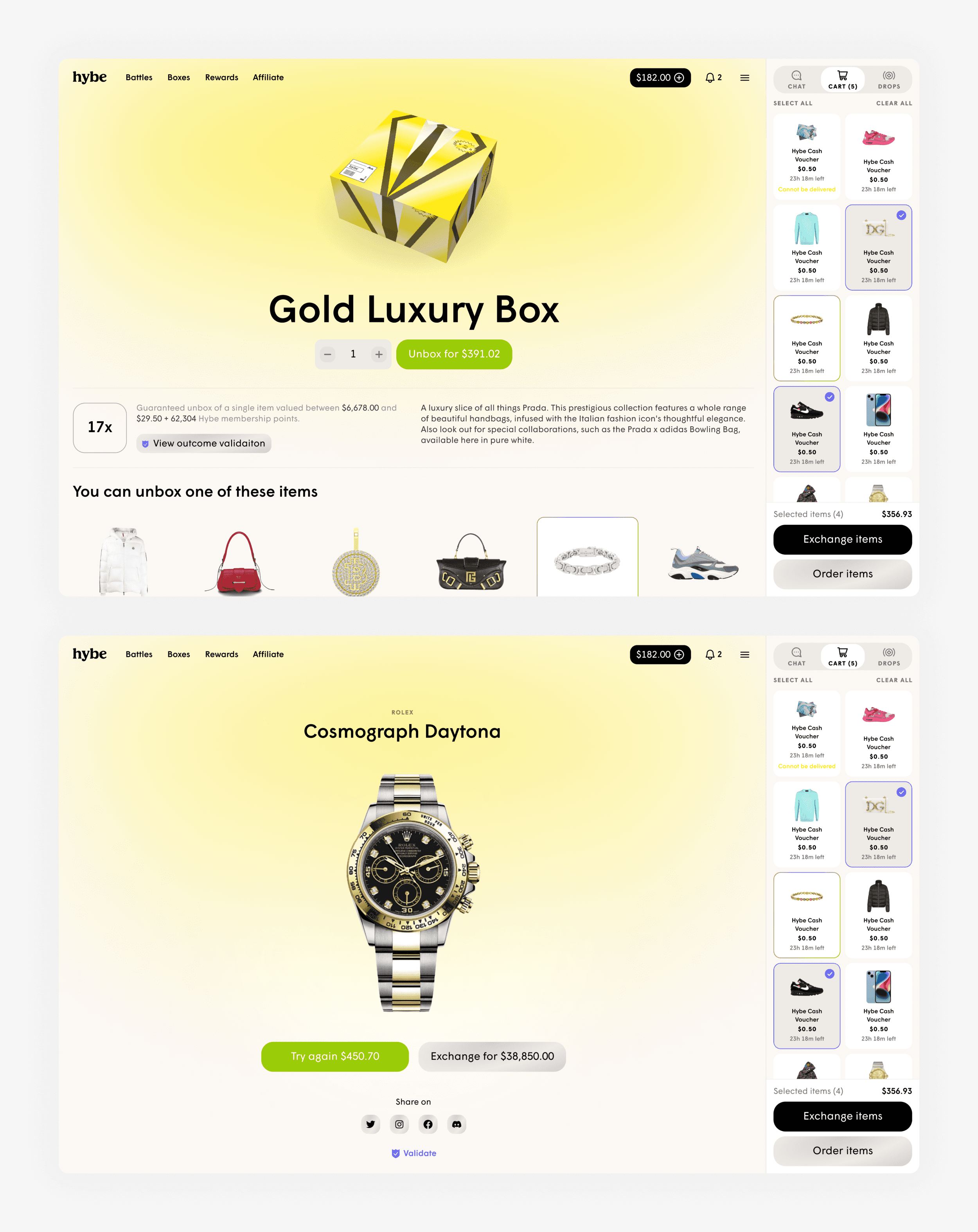
Mystery Boxes Redesign: Enhancing Transparency & Excitement
To reinvigorate the core unboxing experience, we implemented a sleek new UI, interactive animations, and immersive sound effects that amplify anticipation and excitement.
Informed Decision-Making: Users now see the probabilities of winning specific items upfront, increasing trust and engagement.
Guaranteed Rewards: Each box now offers minimum-value guaranteed rewards, reducing frustration and improving perceived value.
Other Contributions
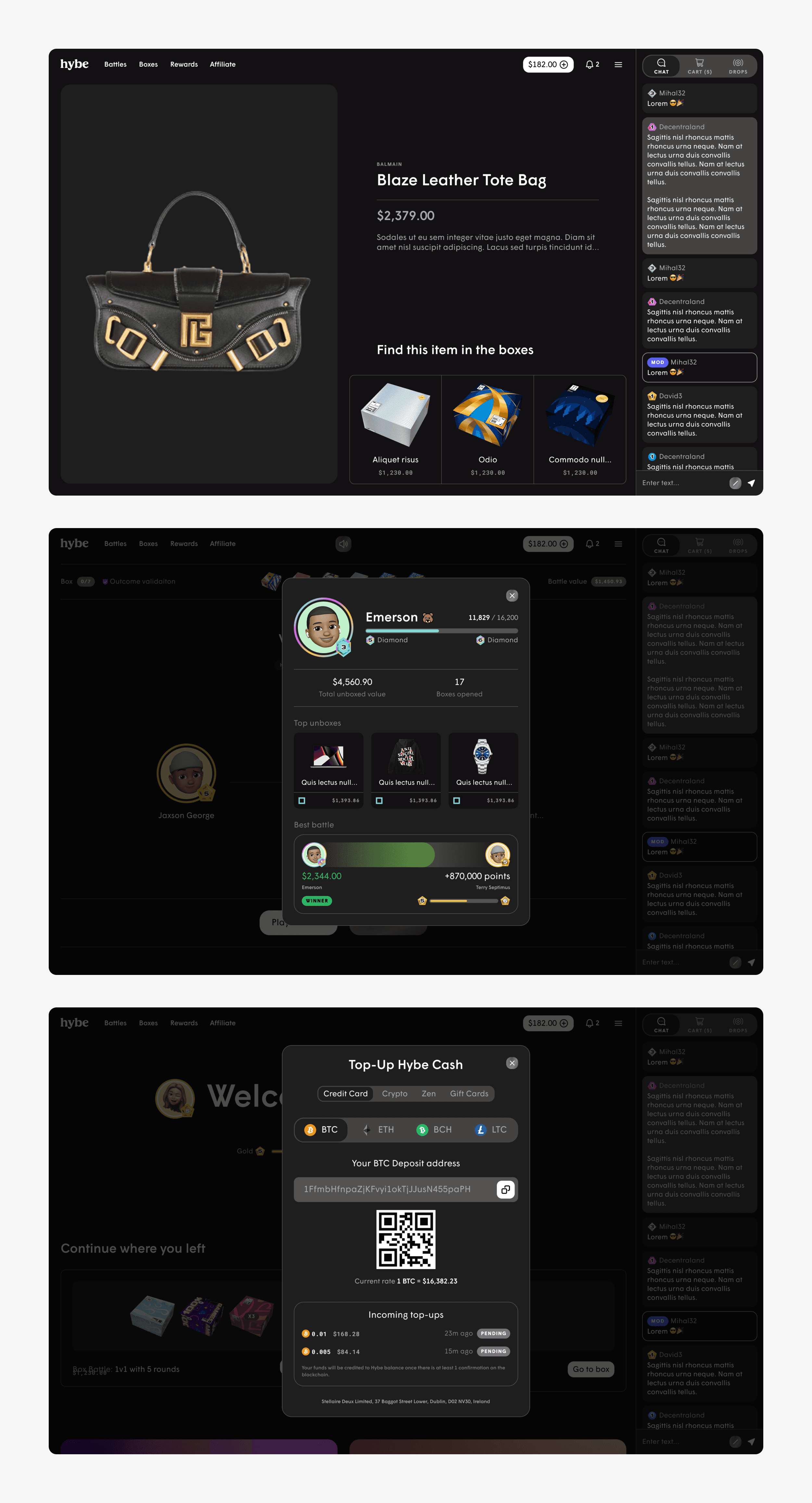
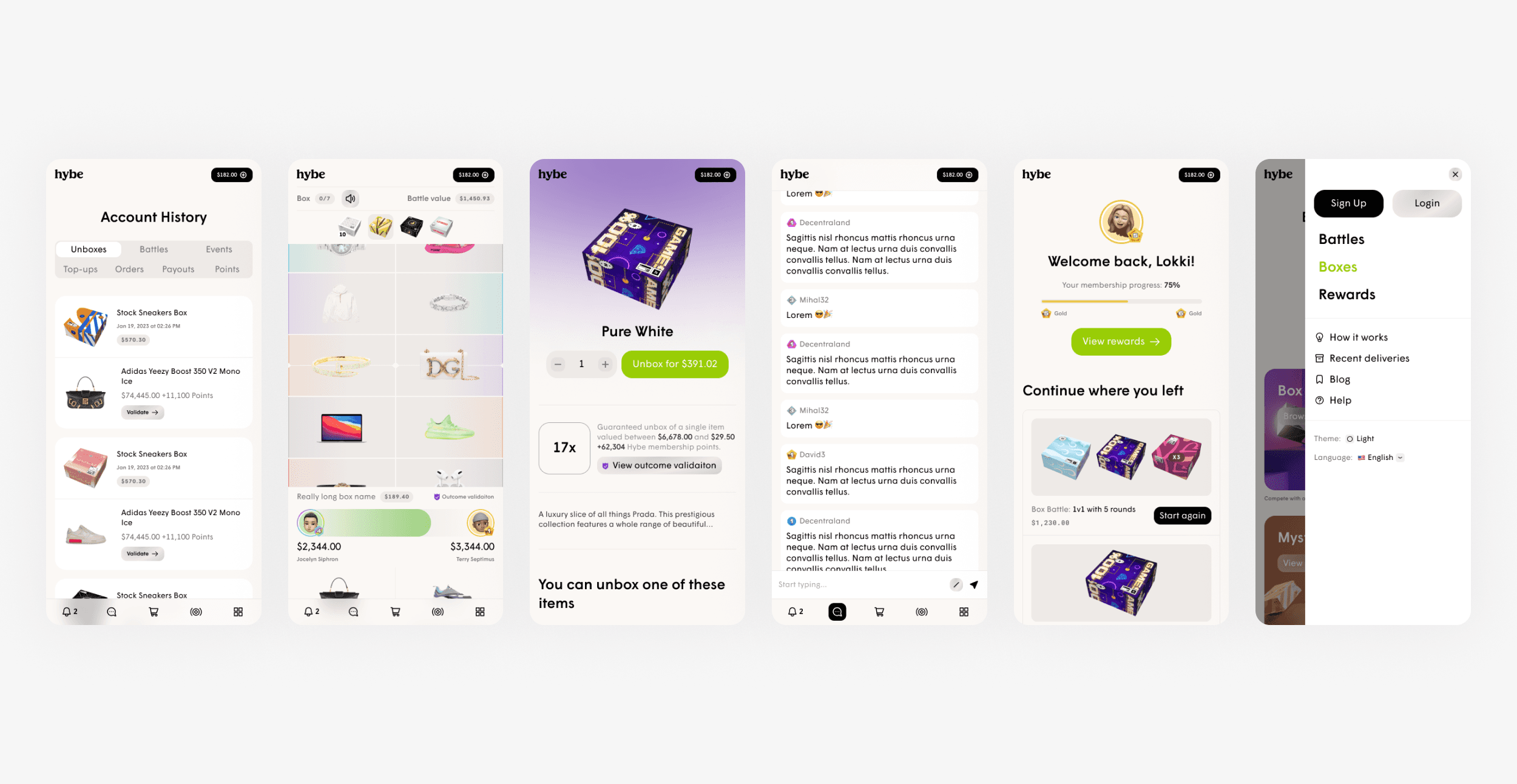
To enhance engagement and foster a sense of community, we introduced a sidebar that integrates Chat, Live Drops, and Cart functionalities. The Chat feature allows users to interact, participate in mini-games and live competitions, and engage with others in real time. The Live Drops feed showcases recent wins, creating excitement and reinforcing social proof. The Cart streamlines item management, making it easier for users to track, exchange, and convert their rewards. By centralizing these features, we transformed the platform into a more interactive and community-driven experience.
Learnings
Community-Driven Design Drives Engagement
Fostering social interaction significantly increased user retention. By integrating competitive and collaborative features, we transformed passive users into active participants, proving that designing for community strengthens long-term engagement and monetization.
Aligning Design with Business & Development Needs
Effective product design extends beyond user needs—it must align with business growth and technical feasibility. Close collaboration with marketing ensured our solutions supported revenue objectives, while working alongside developers ensured seamless implementation. This balance between user experience, business impact, and execution feasibility was key to delivering meaningful results.