Streams Charts: Redesigning Data Insights for Streamers & Businesses
ROLE
Product Designer (Collaborated with a team of 5 designers)
DURATION
4 weeks
SKILLS
User Research, Prototyping, Information Architecture, Data Visualization
Product overview
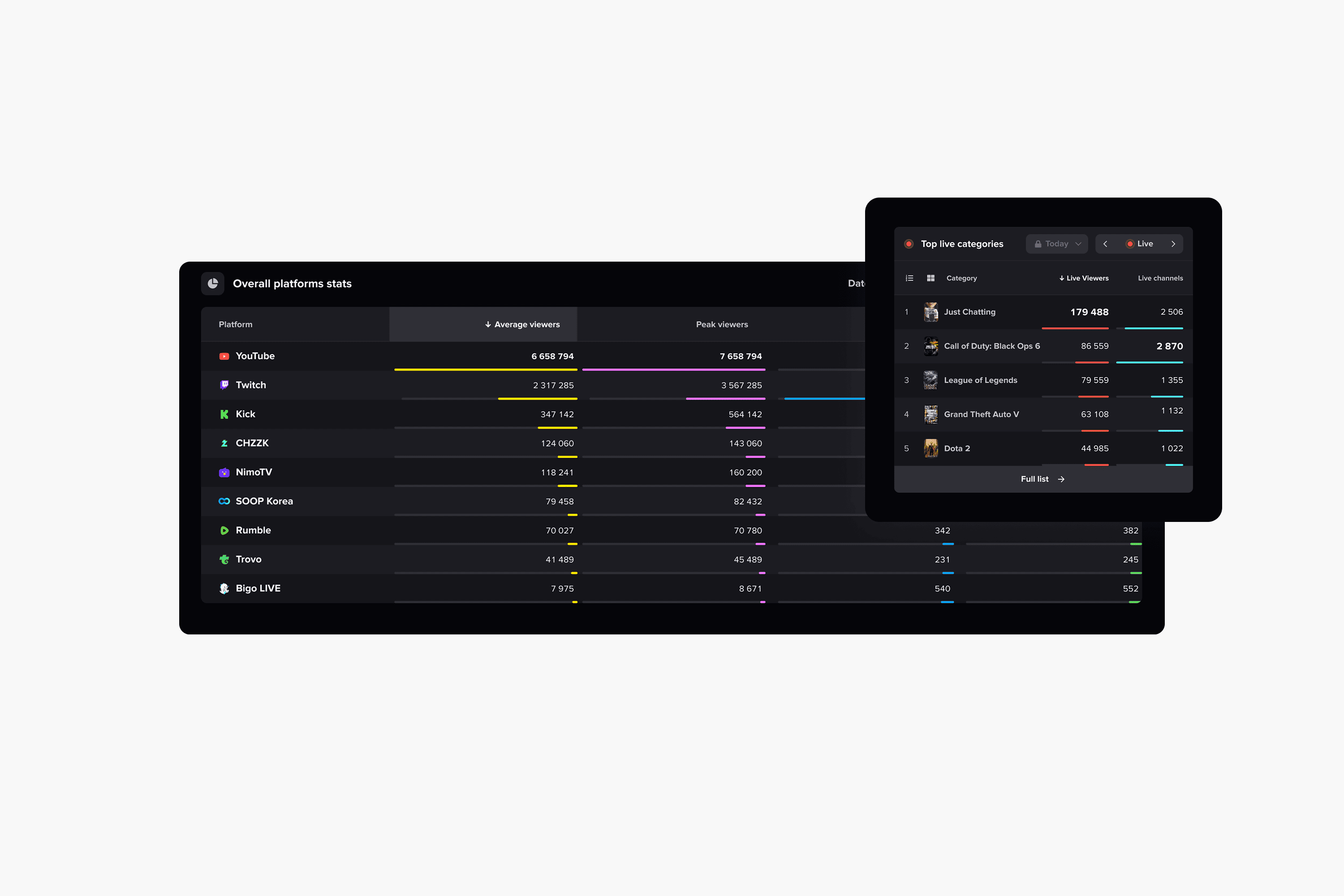
Streams Charts is a leading analytics platform specializing in live-streaming data, tracking over 1 million streamers across major platforms like Twitch, YouTube, and Kick. The platform offers valuable insights into viewer engagement, streamer performance, and market trends, empowering streamers and businesses to make data-driven decisions and optimize their strategies in a competitive market.
Problem definition
The Platforms page did not meet users' needs who sought a comprehensive and comparative view of the streaming market. With individual tabs for each platform, users struggled to get an overview of the entire market, which limited their ability to make informed decisions. The task was to redesign this page to provide a dynamic and user-friendly overview, helping users understand trends and gain insights into the streaming landscape.
Results
Measured through usability testing and post-survey validation:
+35% task completion rate, as users successfully completed key actions with less friction
-40% navigation time, reducing effort needed to find relevant insights
30% of users engaged with Compare Platforms, showing strong adoption of the new feature
+22% user satisfaction, with improved clarity and usability of data insights
Research
Competitive Analysis
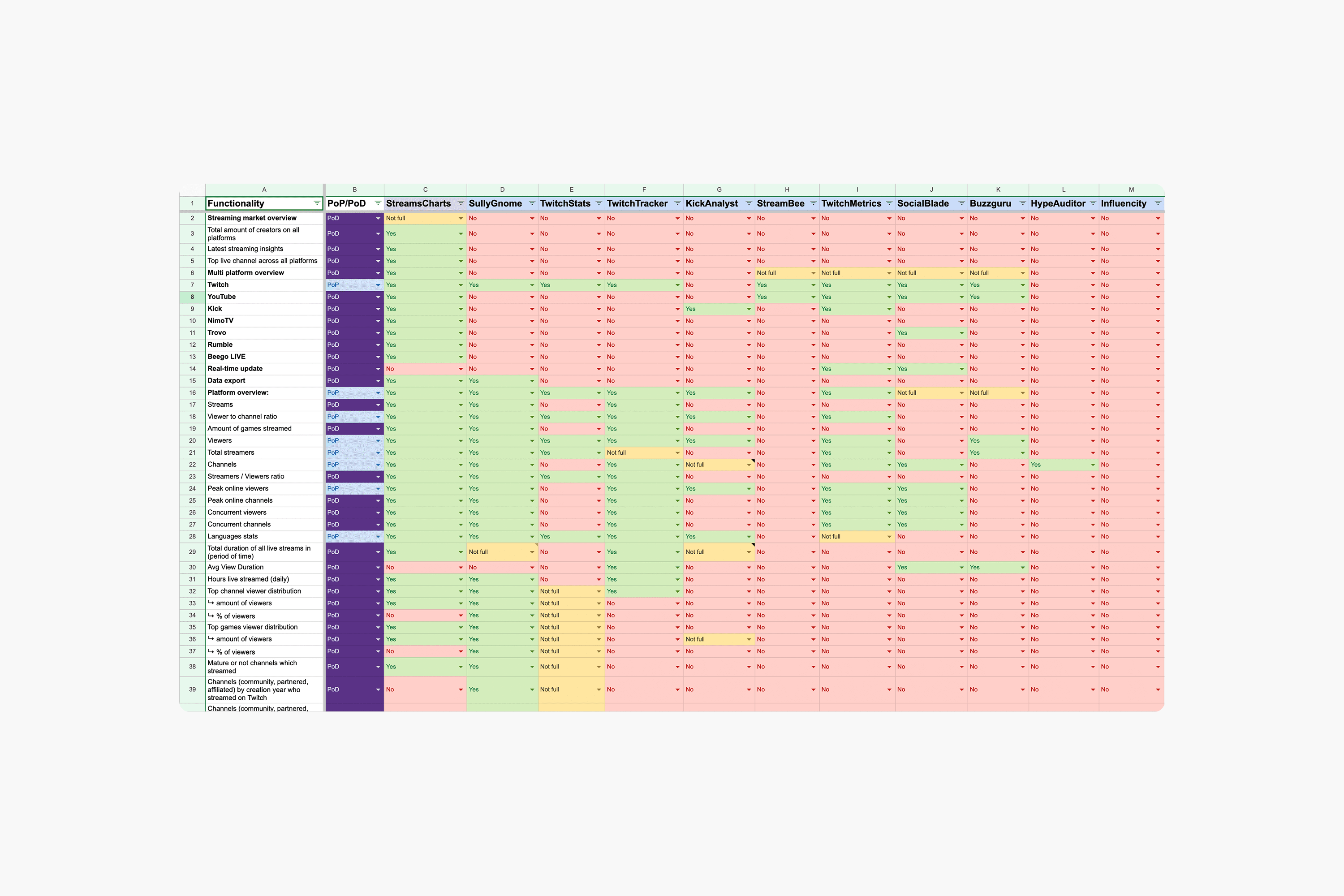
StreamCharts is a unique product with no direct competitors offering the same depth of historical streaming data. However, as the industry continues to evolve, we analyzed alternative solutions addressing similar user needs.
To benchmark industry standards and identify opportunities, we analyzed 11 competitors across 500+ metrics, assessing strengths, weaknesses, opportunities, and threats in the market.
User Interviews
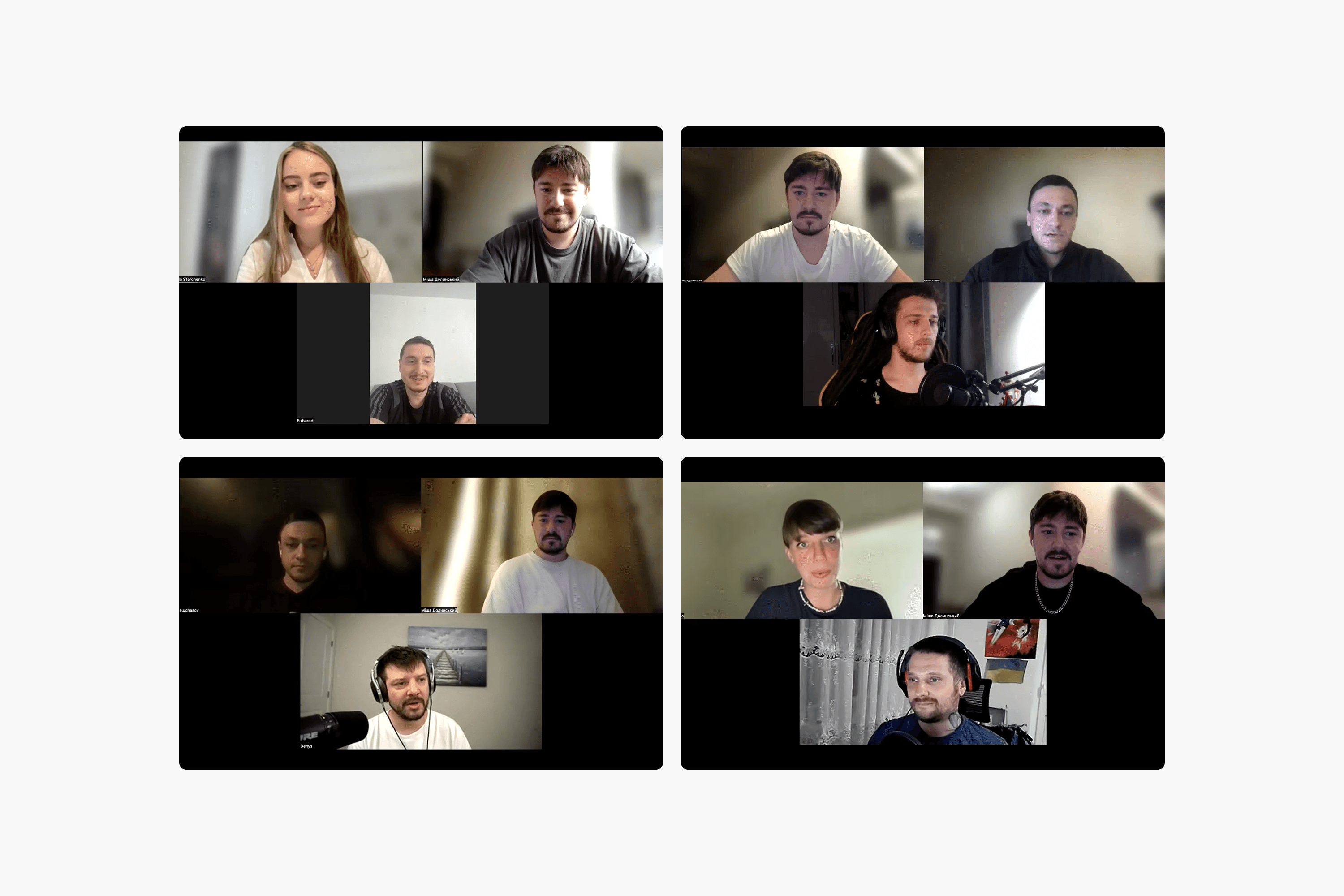
Since the Platforms page serves as a central source of insights for both streamers and businesses, we conducted in-depth user interviews to understand:
What data streamers rely on to grow their careers and optimize revenue.
What metrics businesses use to identify, evaluate, and collaborate with streamers.
Speaking directly to users allowed us to identify their key needs, pain points, and expectations. As StreamCharts already had an established user base, we were able to recruit highly engaged participants, ensuring valuable and actionable insights.
From user interviews, we discovered that:
Users struggled to compare metrics across platforms, as there was no single source for cross-platform analytics.
Streamers found it difficult to locate relevant insights, limiting their ability to grow their audience and revenue.
Users lacked clarity on factors influencing statistical changes, making data interpretation challenging.
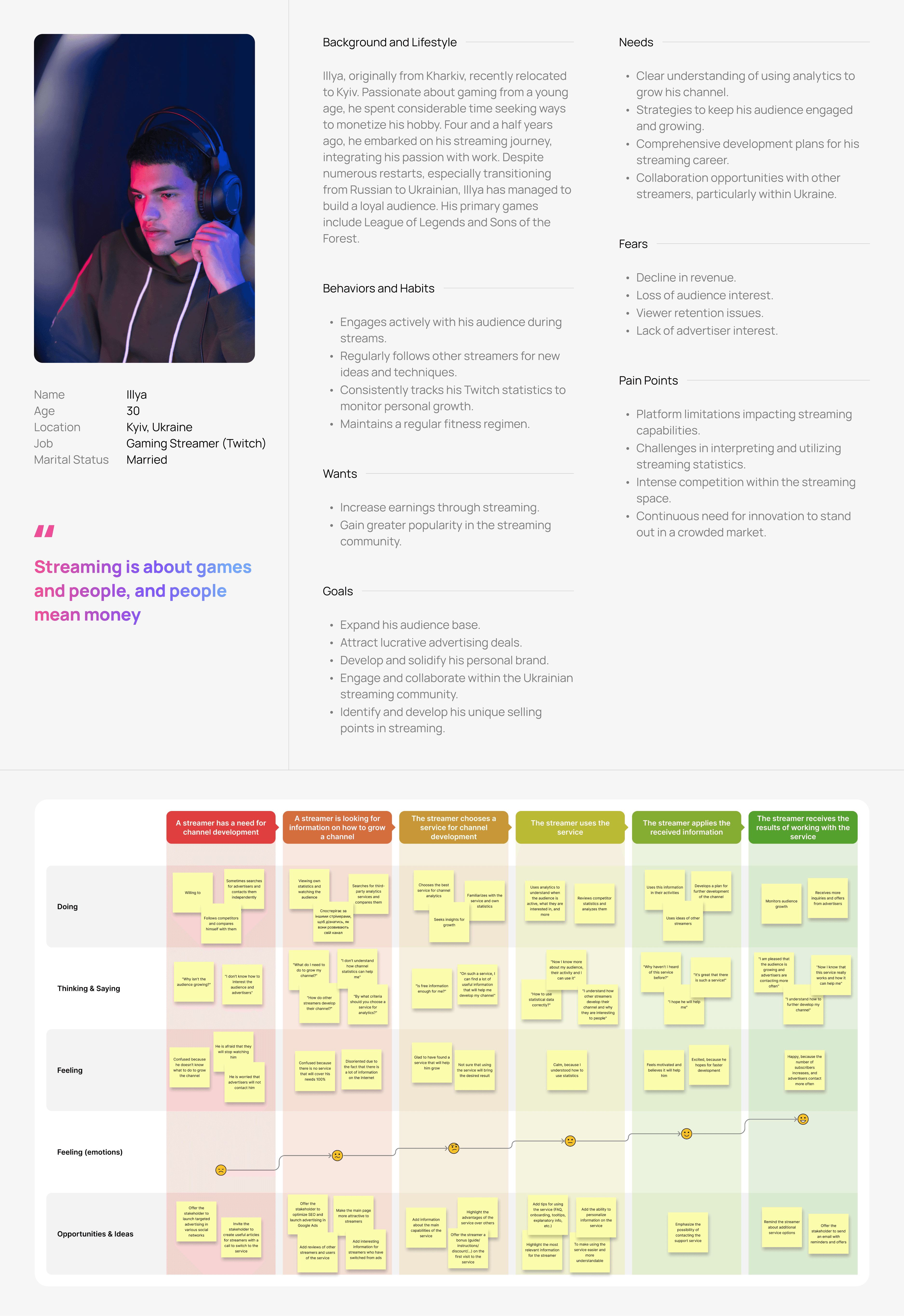
These insights led to the development of a user persona and a customer journey map, helping us structure the most critical data for streamers while ensuring a clearer, more intuitive experience.
Tree Testing
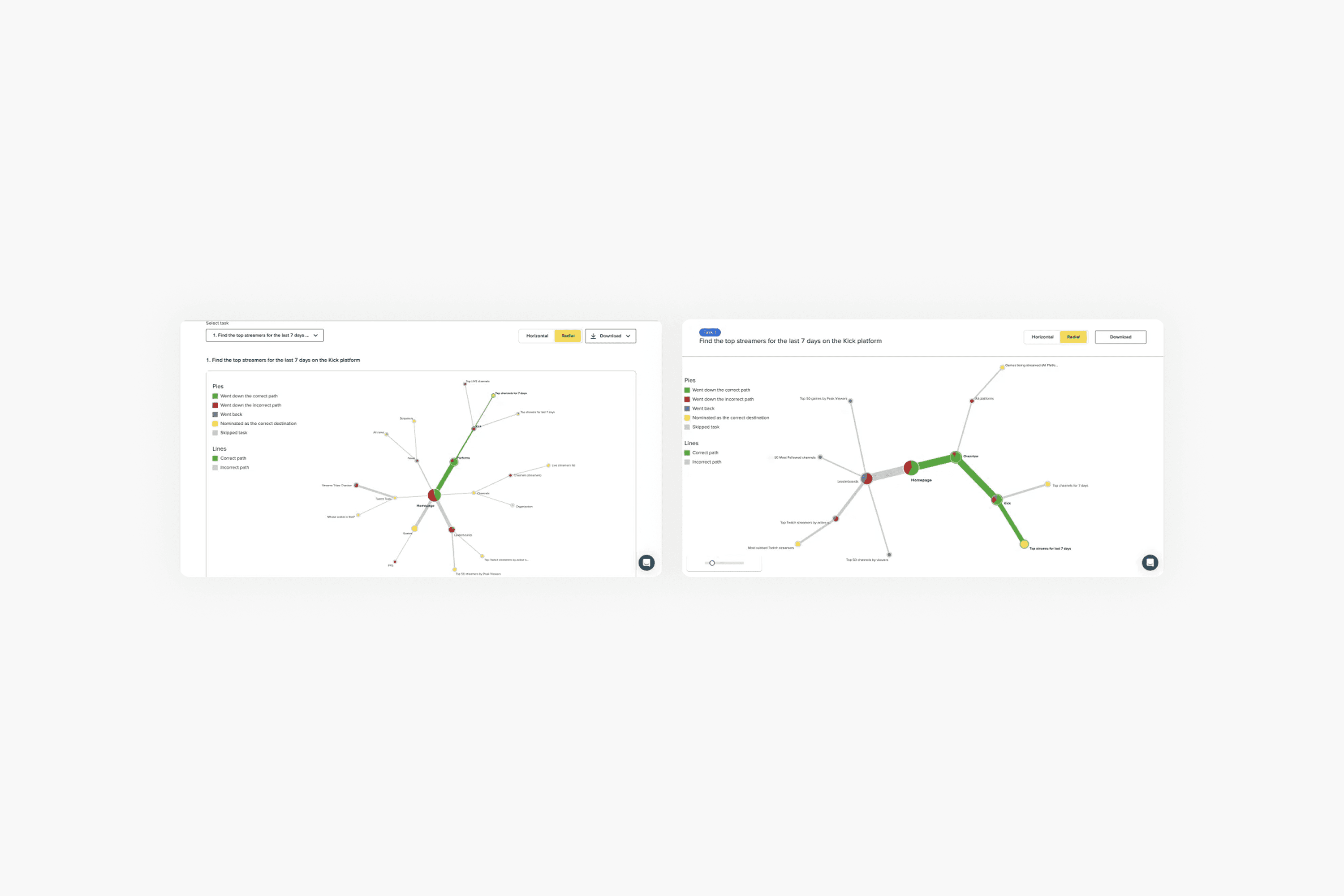
We hypothesized that the existing navigation structure and naming conventions might not clearly communicate what users could expect from each page. To validate this, we conducted tree testing with 83 participants using Optimal Workshop.
Initial test results showed only 14% task success, highlighting severe usability issues in the existing structure.
After restructuring and renaming sections, task success improved to 51%, significantly enhancing navigation clarity.
This validated that improving the information architecture and terminology would directly impact efficiency and usability, making data easier to find and interpret.
Solutions
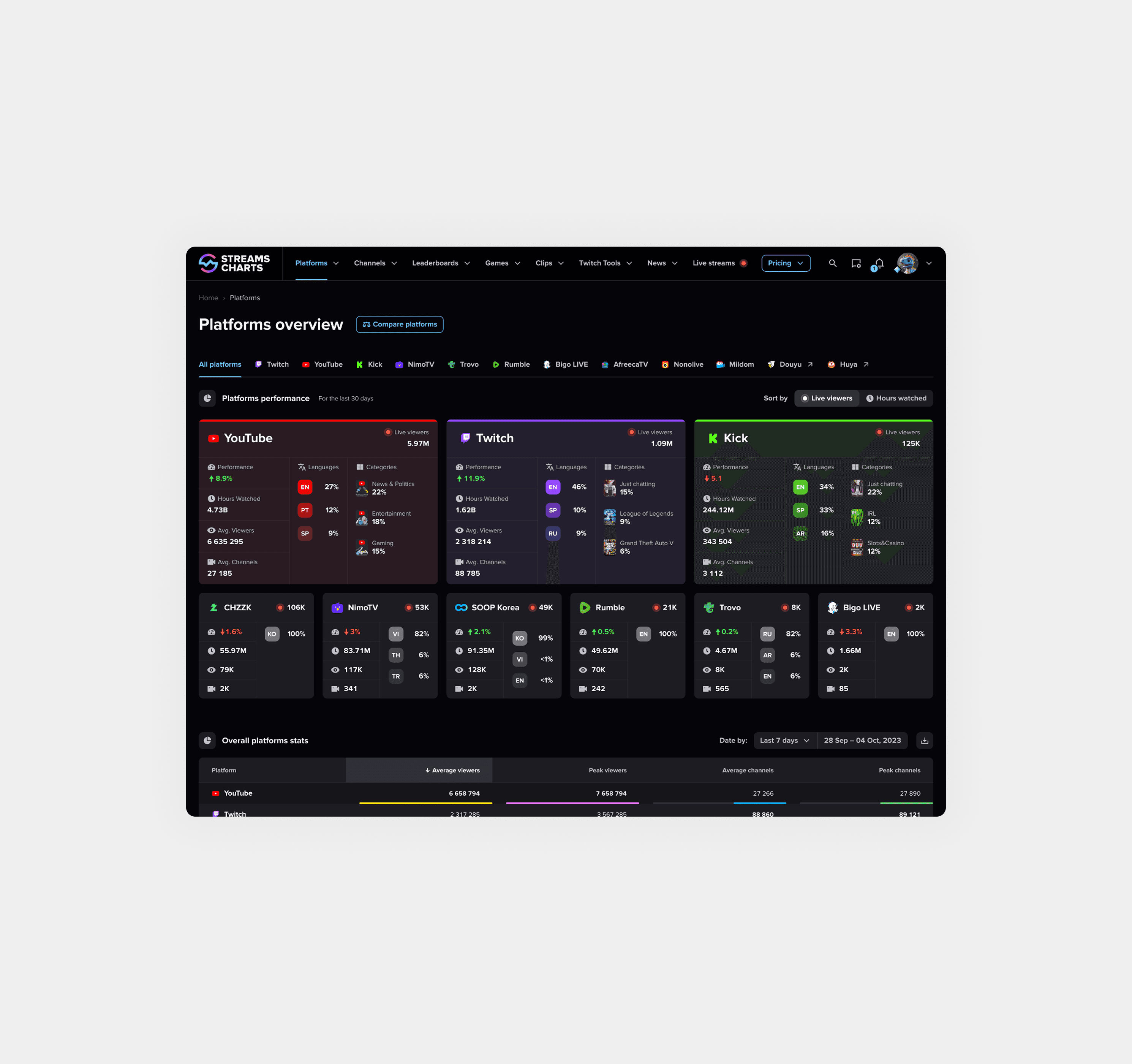
Platform Overview Cards
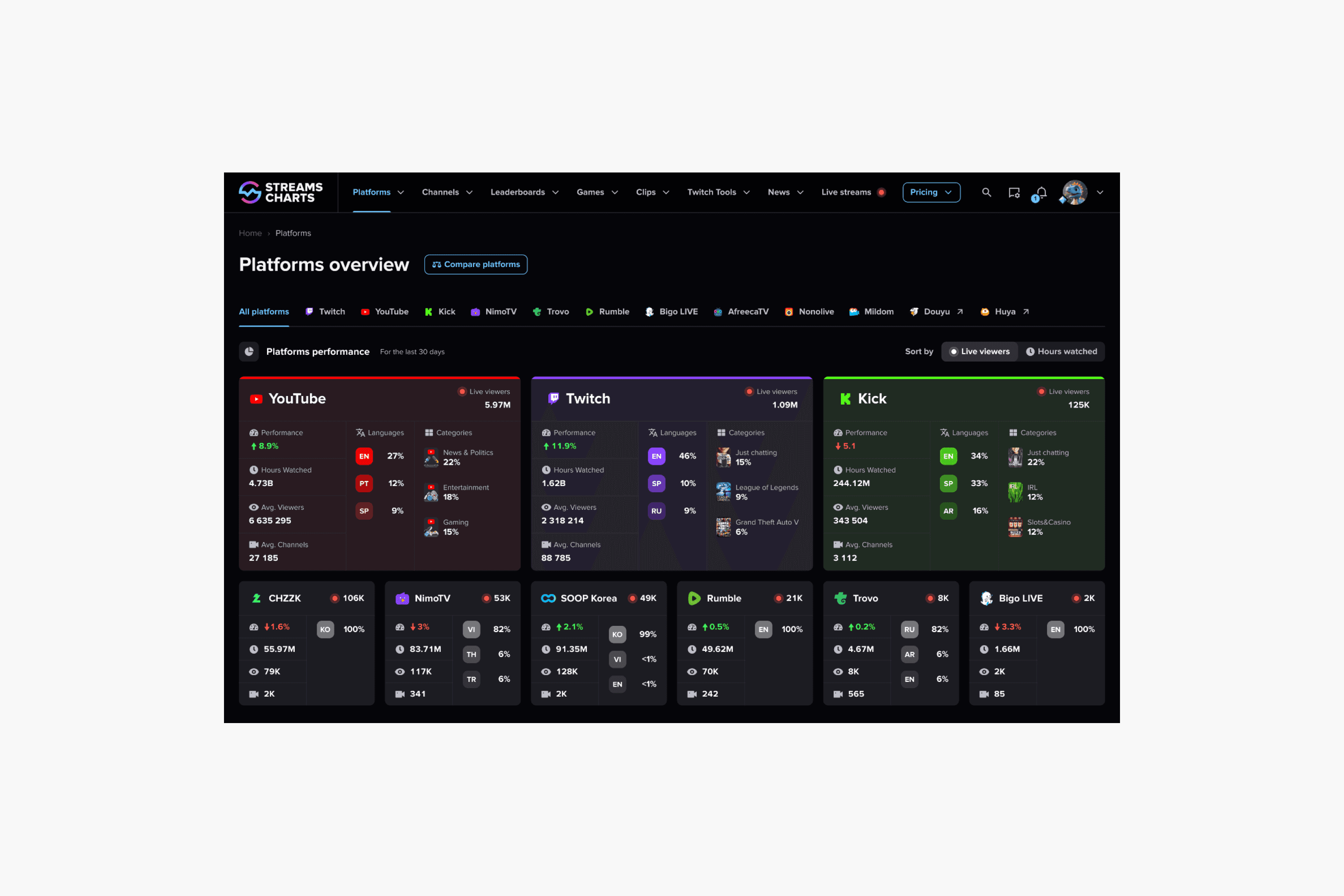
We designed intuitive overview cards for the nine largest streaming platforms, displaying key metrics such as live viewers, performance changes, hours watched, average viewers, average channels, popular languages, and popular categories. Recognizable colors and larger cards for the top three platforms help users quickly identify and associate platforms. This compact, visually appealing presentation enables users to view the entire streaming market on a single screen, providing a comprehensive overview of current trends and key metrics.
Highlighting Top Content
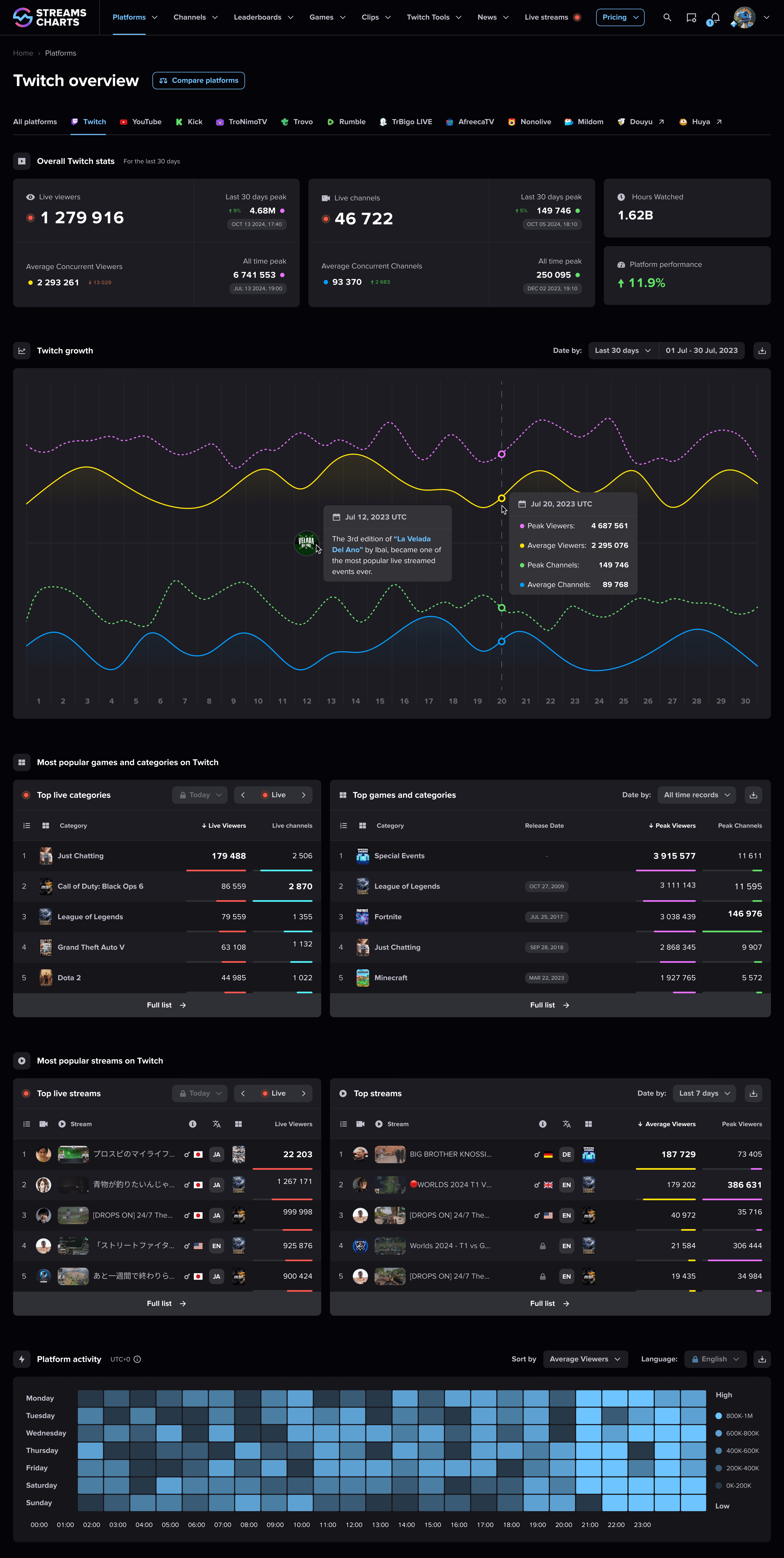
On the Platforms page, we added Top Channels and Top Categories, offering users a snapshot of the most popular streamers and content. This helps users quickly identify platform specializations and understand where the top streamers are active, aiding in strategic decision-making.
Detailed Platform Insights
Each platform’s overview page now includes data on popular games, categories, and streams, providing statistics for both live trends and historical data.
Optimizing Streaming Schedules
Additionally, we incorporated a Platform Activity Map, a visual tool that displays viewer activity over time. This map highlights peak streaming hours, enabling users to optimize their streaming schedules for maximum viewer engagement.
Compare Platforms Page
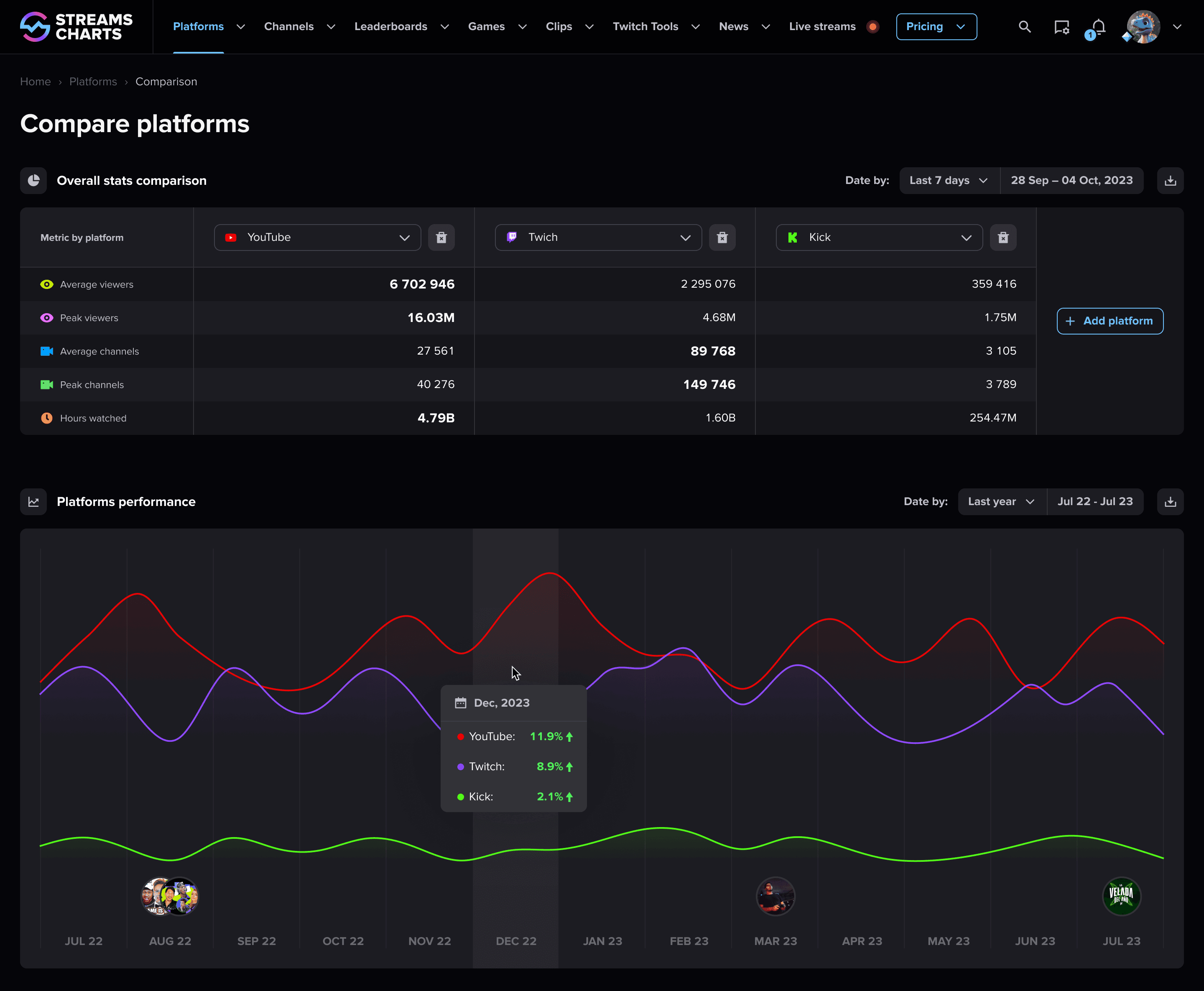
We added a “Compare Platforms” button next to the platform overview, leading to a dedicated comparison page. This page allows users to select up to four platforms for detailed comparison. Visual graphs on this page display performance changes over selected periods, such as months or years, giving users a clear and detailed view of platform trends and growth.
Event-Linked Graphs
We addressed this issue by integrating key events from the streaming and gaming world directly into the channel growth graphs. Users can hover over these events to see detailed information and access related articles or links.
By linking events to data trends, we ensure streamers and businesses stay informed and can make more informed decisions based on the latest industry developments.
Learnings
Designing data-heavy interfaces requires clarity. Complex analytics should be easy to digest and actionable.
Navigation is just as important as content. Even the best data is useless if users struggle to find it.
Good analytics tell a story. Simply displaying numbers isn’t enough - context is key for helping users make informed decisions.
This project reinforced the importance of turning raw data into meaningful insights, making analytics more accessible and impactful for users.